Open vs. Enclosed Auto Transport for Your Car

A car carrier can move your vehicle thousands of miles, but the trailer you choose changes the price, exposure, and booking experience. Open vs. enclosed auto transport is less about picking a winner and more about matching protection to your vehicle, route, and budget.
For many new-car buyers and relocators, open transport is the sensible default. Enclosed service earns its higher price when a vehicle's condition, value, or rarity makes added protection worthwhile. Start by looking at how each option works on the road.
Key Takeaways
Open carriers are widely available and usually cost less than enclosed trailers.
Enclosed shipping protects a vehicle from rain, snow, road grit, and most outside exposure.
Luxury, classic, exotic, and recently restored vehicles often justify enclosed transport.
Ask about cargo insurance limits, deductibles, inspections, and claim procedures before booking.
Pickup access, route demand, season, and trailer availability can affect both price and timing.
How Open and Enclosed Car Transport Differ
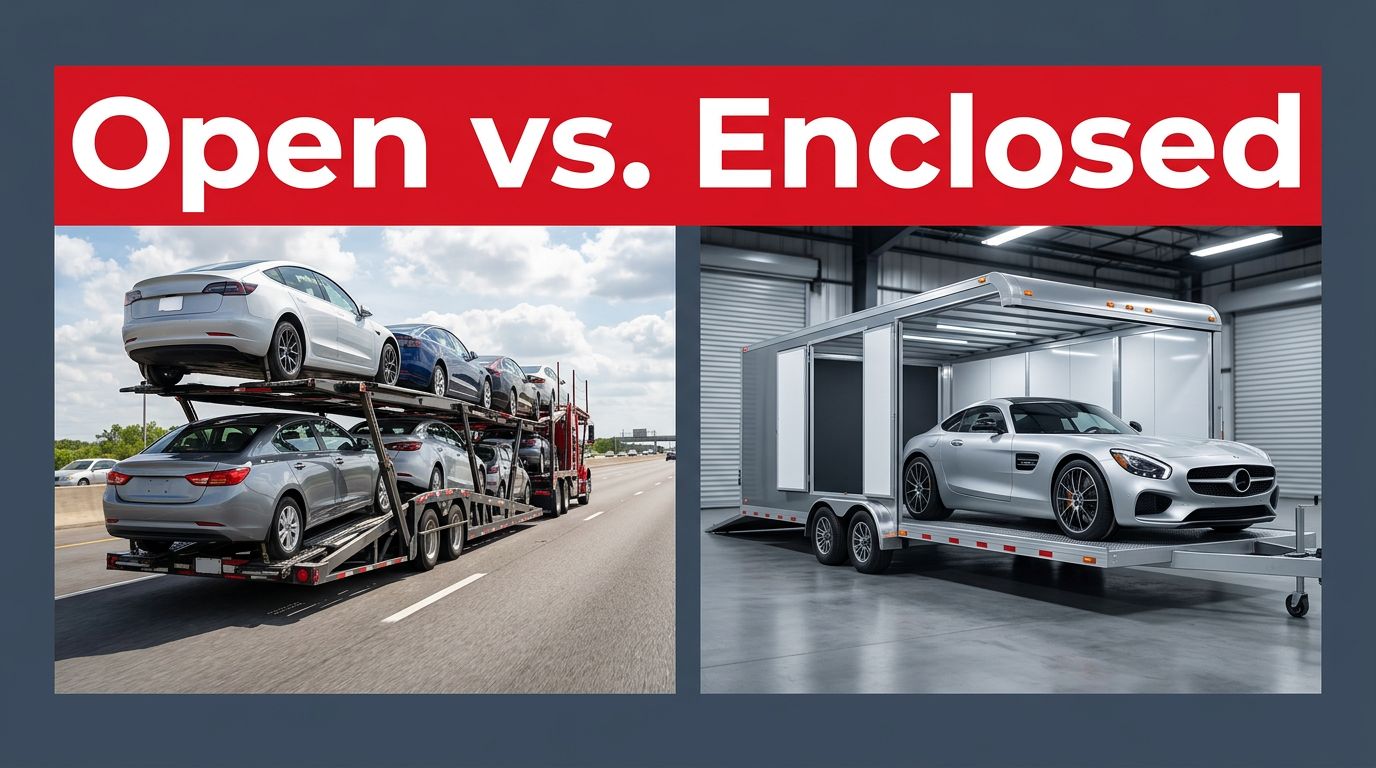
Open transport uses the familiar multi-level carrier seen on highways. Vehicles ride on exposed decks, often alongside several other cars. It is the most common way dealerships, rental fleets, and private owners move standard vehicles across the country.
An enclosed trailer puts vehicles inside a covered cargo area. The trailer walls and roof block direct weather, road debris, and unwanted attention. Some enclosed carriers use lift gates or low-clearance loading equipment, which can help with sports cars and collector vehicles.
Protection is the biggest practical difference. Open carriers face the same rain, wind, dust, and road spray as every other vehicle on the highway. Most cars arrive without damage, but exposure is part of the arrangement. An enclosed trailer reduces those outside risks, although it cannot remove every possibility of shipping damage.
Open trailers also haul more vehicles at once. That capacity helps keep rates lower and gives brokers and carriers more scheduling options. By contrast, fewer enclosed trucks operate on any given route, and they carry fewer cars per load.
A helpful open versus enclosed shipping cost comparison reports that enclosed transport often costs 30 to 60 percent more. The actual difference depends on distance, season, vehicle size, pickup location, and carrier demand.
Enclosed transport buys more protection and privacy. Open transport buys broader availability and a lower shipping rate.
Cost, Availability, and Delivery Timing
Price matters, especially when a relocation already includes deposits, moving expenses, and travel costs. Open transport is generally the budget-conscious choice because carriers can fill more spaces and cover more routes.
Enclosed vehicle shipping costs more because trailers are less common, load capacity is lower, and equipment may need extra care for low-clearance vehicles. A long-distance shipment can widen the dollar gap, even if the percentage difference stays similar.
This side-by-side view makes the tradeoffs easier to compare.
Factor | Open Auto Transport | Enclosed Auto Transport |
|---|---|---|
Typical price | Usually the lower-cost option | Often 30 to 60% higher |
Carrier availability | Broad, with many route options | More limited, especially on less-traveled routes |
Weather exposure | Vehicle is exposed | Trailer walls and roof provide coverage |
Road debris exposure | Possible | Greatly reduced |
Vehicle capacity | Often several vehicles | Usually fewer vehicles |
Pickup flexibility | Better for standard neighborhoods and lots | May need more room for larger trailers |
Best fit | Daily drivers, family vehicles, routine moves | Classics, exotics, luxury cars, prized vehicles |
The lower price does not mean open shipping is poor service. It is the standard method for new vehicles headed to dealerships. A new SUV, commuter sedan, or family pickup can often travel safely on an open carrier, especially if normal road wear does not create major concern.
Still, schedule expectations should stay realistic. Both trailer types typically make multiple pickups and deliveries. Weather, traffic, road closures, mechanical issues, and customer availability can affect timing. Enclosed service is not automatically faster. In some markets, finding an enclosed carrier may take longer than booking open transport.
If timing is tight, ask whether the quote covers a pickup window or a guaranteed date. Also ask if expedited service is available and what happens if the assigned carrier changes.
When Extra Protection Makes Sense
Enclosed car shipping makes the strongest case when a vehicle has high financial value, high sentimental value, or fragile condition. A restored 1967 Ford Mustang, a Porsche 911 with low front clearance, or a newly purchased luxury vehicle may deserve a protected trailer.
Owners also choose enclosed vehicle transport for show cars, collector vehicles, race cars, rare imports, and vehicles with custom paint. Road grit may not ruin a normal daily driver, but it can create an unnecessary concern for a car that has just left a restoration shop.
Weather is another factor. A winter route through mountain states can bring snow, salt, and slush. Long highway stretches can expose an open-loaded car to rain, insects, dust, and small debris. Enclosed trailers reduce that exposure, which can be useful when the destination is a concours event, photo shoot, or collector storage facility.
For vehicles that need this level of care, review enclosed auto transport services before comparing quotes. Ask whether the carrier uses soft straps, lift-gate loading, or other equipment suited to the vehicle's clearance and condition.
However, a high sticker price alone does not always require an enclosed carrier. Many new vehicles travel from factories and ports to dealerships on open trailers. If your new car will soon face daily parking lots, rain, and regular driving, open transport may fit the situation and your budget better.
A separate comparison of open and enclosed transport also highlights the practical edge open carriers have in availability. That can matter when you need to move quickly after a home sale, lease ending, or job transfer.
Insurance Questions to Ask Before You Book
Trailer type does not replace insurance. Every shipment needs clear paperwork and a careful vehicle inspection at pickup and delivery. A reputable carrier should document the car's condition on a bill of lading before loading it.
Ask for the carrier's cargo insurance information. Confirm the coverage limit applies to your vehicle's value, then ask whether the policy has a deductible. A carrier may carry insurance, yet the limit could be too low for an exotic car or a fully restored classic.
Get direct answers to these questions before you commit:
What is the cargo insurance limit, and does it cover my vehicle's declared value?
Are there exclusions for aftermarket parts, custom paint, loose items, or convertible tops?
Who handles a claim if damage occurs, the carrier, broker, or insurer?
How quickly must I report damage after delivery?
Can I receive the carrier's insurance certificate before pickup?
Does the quote include all fees, including fuel, oversized-vehicle, or remote-area charges?
Take dated photos of every exterior panel, wheels, windshield, roof, and interior before pickup. Keep the images until you have inspected the car at delivery. During the final walk-around, compare the vehicle to the bill of lading before signing. If you see new damage, note it clearly on the document and take additional photos.
Personal belongings create another issue. Most auto carrier cargo policies do not cover items packed inside the vehicle. Remove valuables, paperwork, electronics, and anything loose. Check the carrier's policy before leaving even permitted items in the car.
A Practical Checklist for Choosing Your Trailer
The right choice becomes clearer when you weigh the shipment against your real priorities. Use this checklist before requesting quotes.
Choose open transport if you are moving a reliable daily driver, standard new vehicle, SUV, or pickup and want the best value.
Choose open transport if broad carrier availability matters more than full weather coverage.
Consider enclosed transport if the vehicle is classic, exotic, collectible, heavily customized, or freshly restored.
Consider an enclosed trailer if your car has very low ground clearance or needs special loading equipment.
Select enclosed shipping if rain, snow, road spray, and debris pose an unacceptable risk for the vehicle's condition.
Compare pickup locations honestly. Large enclosed trailers may have trouble reaching narrow residential streets, steep driveways, or tight cul-de-sacs.
Request quotes for both options if the decision comes down to price. The actual difference may be smaller or larger than expected on your route.
Confirm the pickup window, delivery estimate, carrier insurance, and inspection process in writing.
A practical relocation example helps. Someone moving a three-year-old Honda CR-V from Atlanta to Denver may find open shipping the logical option. The vehicle is built for everyday use, open carriers are common on that route, and the savings can cover other moving costs.
Now consider a buyer sending a low-mileage Chevrolet Corvette from Scottsdale to a collector garage in New England. An enclosed trailer may be the better fit because road exposure, loading clearance, and cosmetic condition carry more weight than the price difference.
Choose the Protection That Fits the Vehicle
Open transport gives most owners reliable, economical access to nationwide car shipping. Enclosed service adds a covered environment for vehicles where condition and exposure carry greater importance.
The right answer depends on the car, route, schedule, and your comfort with normal road exposure. A clear quote, documented insurance, and an honest condition inspection matter with either option.
For help matching your vehicle to the right carrier, US Car-Go Freight can provide transport options based on your route and shipping needs.


Comments