Cross Country Boat Transport: Costs, Planning and Process

Moving a boat across the country can feel like a big job, especially when you are dealing with marinas, trailers, and delivery timing for the first time. Cross country boat transport is often safer and more practical than driving a long route yourself or moving the vessel by water.
The final boat transport cost depends on the boat's size, route, preparation needs, and type of equipment required. Sailboats, yachts, and small trailerable boats don't all move the same way. A clear plan helps avoid surprises before pickup day.
Cross Country Boat Transport: How the Process Works
The process starts with a detailed quote. The carrier needs the boat's overall length, beam, height, weight, pickup location, and delivery location. Measurements need to include the trailer, radar arches, towers, and other parts that add height or width.
Next, the company checks whether the boat can travel on its own trailer. If not, the carrier may use a specialized boat trailer, flatbed, hydraulic trailer, or equipment made for oversized boats. The vessel may need to be lowered, blocked, wrapped, or placed on a cradle.
Pickup and delivery locations matter too. A marina with wide access is simple. A narrow road, steep driveway, or crowded storage yard may require extra planning. Inspect the boat with the driver at pickup, then repeat the inspection at delivery. Keep photos and signed condition reports.
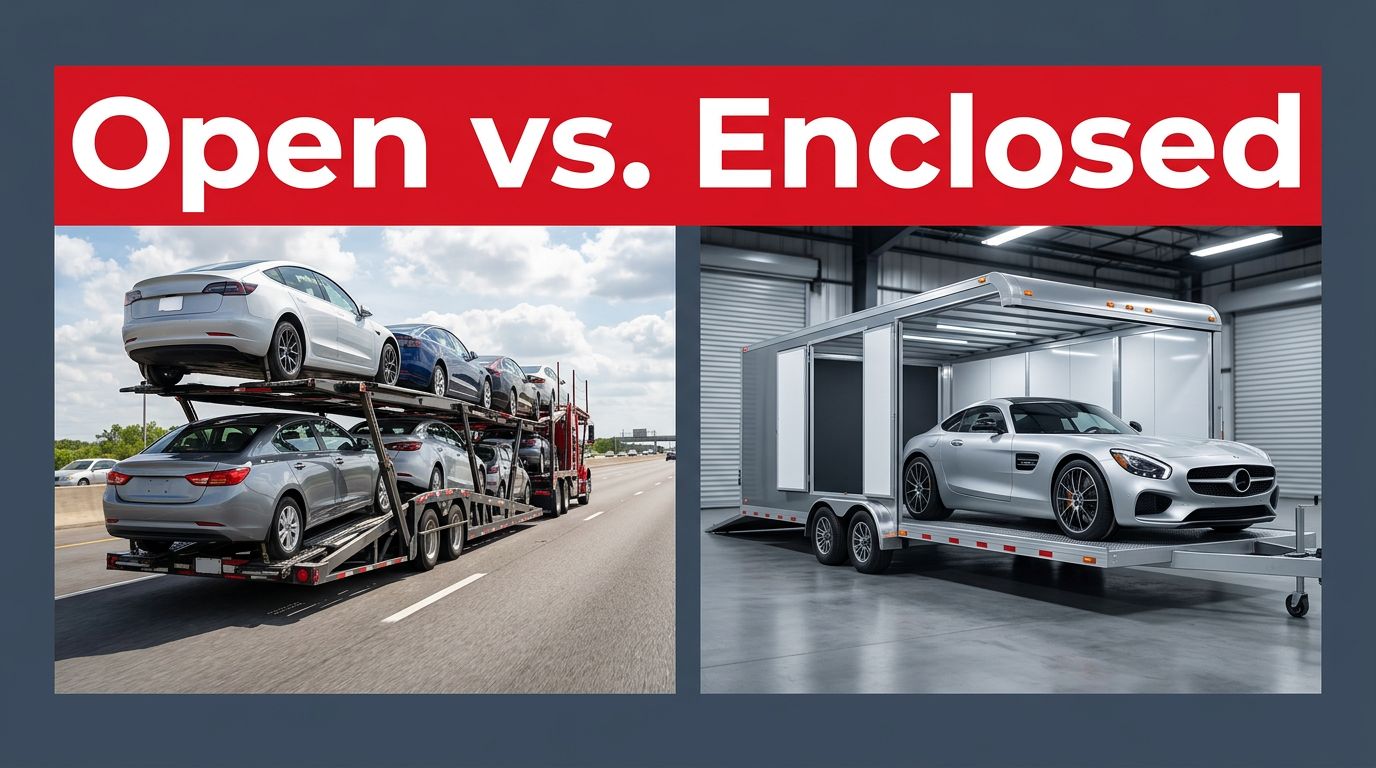
Choosing Between Open Auto Transport and Enclosed Vehicle Transport
Open auto transport equipment is not always right for a boat. A small boat on a sound trailer may travel safely on an open trailer when it has proper supports and tie-downs.
Enclosed vehicle transport or covered transport can make sense for sensitive finishes, electronics, canvas, or exposed equipment. It offers more protection from road debris and weather, but it may cost more and has height limits.
Ask if the carrier has boat-specific supports, cargo insurance, and experience with your vessel type. A car hauler is not automatically a boat hauler.
What to Prepare Before the Carrier Arrives
Preparation reduces damage risks and delays. Before shipping a boat cross country, handle these basic items:
Remove loose gear, personal items, fishing equipment, and anything that can shift.
Drain water tanks and reduce fuel when the carrier requests it.
Disconnect batteries and secure hatches, doors, and storage compartments.
Lower or remove the mast, antennas, bimini tops, and other exposed parts.
Take dated photos of the hull, trailer, electronics, and accessories.
Gather registration and insurance documents before pickup.
Confirm whether the carrier, marina, or boat owner handles loading and unloading. Don't assume a marina lift is included in the quote.
How Much Does Cross-Country Boat Transport Cost?
A cross-country boat transport cost can range from roughly $1.50 to $16 per mile. That is a planning range, not a guaranteed price. Small boats on trailers are often near the lower end. Large sailboats, yachts, and oversized loads can cost much more.
For a 1,000-mile move, a smaller boat may cost about $1,500 to $3,000. A midsize boat may cost several thousand more. Large yachts or sailboats can reach $10,000 to $20,000 or higher when permits, escorts, and loading equipment are needed.
These are broad planning estimates:
Route Distance | Estimated Transport Range |
|---|---|
Under 500 miles | $900 to $4,000 |
500 to 1,000 miles | $1,500 to $7,000 |
1,000 to 2,000 miles | $2,500 to $12,000 |
More than 2,000 miles | $4,000 to $20,000+ |
A per-mile shortcut is useful for early planning, but a written carrier quote is more reliable. Review this boat transport cost guide for more detail on size, distance, and overland pricing.
Sailboat Transport Rates and Extra Fees to Expect
Published sailboat transport rates often fall around $5 to $8 per mile for boats under 25 feet. Boats between 25 and 40 feet may run $7 to $12 per mile. Boats over 40 feet can reach $10 to $16 per mile.
The higher rate reflects added labor and legal requirements. Common extra charges include mast removal, marina lifts, cradle rental, permits, pilot cars, tolls, fuel, storage, and difficult access roads. Charter or boat rental pricing is not the same as overland hauling prices.
For a general look at current per-mile pricing, review boat transport cost ranges by distance.
Key Factors When Shipping a Boat Cross Country
Mileage matters, but it is not the only price factor. Carriers also consider length, beam, height, weight, total road width, route demand, and access at both ends.
Wide or tall boats may need oversize permits, planned routes, restricted travel hours, and escort vehicles. A shorter route can cost more if it includes tight marina roads, steep grades, tolls, or special loading work.
Season also affects availability. Spring and early summer are busy periods in many boating markets. More demand can mean fewer carrier options and higher pricing.
Why Boat Size and Route Difficulty Matter More Than Mileage Alone
Two boats can travel the same 1,000 miles and receive very different quotes. A small trailerable fishing boat may need basic tie-downs and an open trailer.
A 40-foot sailboat may need mast removal, a custom cradle, permit coordination, and a specialized carrier. The price covers labor, equipment, legal limits, and risk, not fuel alone.
How to Compare Boat Transport Companies and Avoid Problems
Get at least three detailed quotes before booking. Ask whether the company is a broker or the actual carrier. Brokers coordinate moves, while carriers physically haul the boat. Both can be useful, but you should know who manages each part.
Verify cargo insurance, licensing, experience with similar boats, cancellation terms, damage procedures, and the estimated delivery window. Don't choose a quote far below the others until you know what it excludes.
The written quote should list boat dimensions, preparation duties, pickup and delivery points, permits, loading, unloading, and extra fees. A clear quote prevents most pricing confusion.
Questions to Ask Before Booking the Move
Who handles mast stepping and marina lift services?
Will the boat travel on its own trailer or a carrier-provided trailer?
How will the hull be blocked, supported, and tied down?
What happens if weather delays pickup or delivery?
Who pays for storage if delivery is delayed?
Inspect the boat with the driver and keep your signed condition report and photos. Those records matter if you need to file a damage claim.
Final Planning Steps
Accurate measurements, proper preparation, and a detailed carrier quote are the best ways to control cross-country shipping costs. Small trailerable boats are usually simpler to move. Large sailboats and oversized yachts need more time, equipment, and planning.
Collect the boat's dimensions, pickup and delivery details, and preferred timing before you request quotes. Better information at the start usually leads to a more accurate price and a smoother move.


Comments