
California to Texas Car Shipping Costs in 2026

A California to Texas move can cover more than 1,200 miles, and driving isn't always the cheaper choice. Fuel, hotel stays, meals, time off work, and wear on your car can add up fast.
For most standard vehicles, California to Texas car shipping costs $850 to $1,350 in July 2026. Your final price depends on the cities, vehicle size, transport type, pickup date, and carrier availability.
Here's what you should expect before you request a quote.
Key Takeaways
Most sedans shipped on an open carrier cost about $850 to $1,350.
SUVs, trucks, oversized vehicles, and inoperable cars usually cost more.
Enclosed vehicle shipping costs more but adds protection for luxury, classic, and high-value vehicles.
Summer is a busy shipping season, so flexible dates can help control costs.
A clear quote should explain the carrier rate, pickup window, transport type, and any extra fees.
What Is the Average Cost to Ship a Car From California to Texas?
The average cost to ship a car from California to Texas is usually between $850 and $1,350 for open transport. A mid-size sedan often lands near the middle of that range, around $1,075 to $1,200.
That price covers a long interstate route, often between 1,300 and 1,800 miles. Los Angeles to Austin is shorter than Los Angeles to Dallas or San Antonio. Northern California pickups can also change the total because the carrier has more ground to cover.
Published 2026 route estimates from SGT Auto Transport place standard open shipping in a similar $850 to $1,300 range. Quotes can move up or down daily, especially during July when carriers are busy.
Transport Type | Typical California to Texas Cost | Best For |
|---|---|---|
Open carrier | $850 to $1,350 | Most daily drivers |
Enclosed carrier | $1,250 to $2,100+ | Luxury, classic, exotic, or collectible cars |
Expedited pickup | Adds $200 to $500+ | Tight moving dates |
Inoperable vehicle | Adds $150 to $300+ | Cars that cannot roll, steer, or brake |
Open transport is the most common choice because it gives you solid value. Enclosed transport costs more because fewer enclosed trailers run each route and each trailer carries fewer vehicles.
A low quote isn't always a bargain. If the price is far below other quotes, the carrier may not accept the load at that rate.
What Changes Your California to Texas Shipping Quote?
Auto shipping is not a flat-rate service. Carriers price each shipment based on space, route demand, labor, fuel, and how easily they can pick up and deliver the vehicle.
Your pickup and delivery cities
Major metro areas are usually easier for carriers. A shipment from Los Angeles to Houston, Dallas, Austin, or San Antonio may cost less than a pickup in a remote California mountain town or a small Texas community.
Carriers prefer routes close to major highways and regular freight lanes. If your address has narrow roads, low trees, or tight turns, the driver may ask to meet at a nearby parking lot. That is normal and often makes pickup safer.
Vehicle size and condition
A compact sedan uses less trailer space than a full-size pickup. SUVs, large trucks, lifted vehicles, and vans can cost more because they weigh more and take up more room.
A vehicle that does not run also needs extra equipment and labor. Tell the company if the car cannot start, steer, roll, or brake. Hiding that detail can cause delays and an added charge at pickup.
Time of year and pickup flexibility
July is part of the summer moving season. Families relocate, students move, and more people ship vehicles before or after vacations. More demand can mean higher prices and fewer available pickup dates.
If your schedule allows, give a pickup window instead of one fixed day. A carrier has a better chance to fit your vehicle onto a full route, which can help keep the price reasonable.
Fuel and carrier availability
Fuel costs affect every long-distance shipment. Carrier supply matters too. A full truck already heading from California toward Texas may offer a better rate than a carrier that must change its route to get your vehicle.
RoadRunner's California to Texas pricing guide also shows how broad the market range can be. Quotes are tied to real carrier space, not only mileage.
Open vs. Enclosed Vehicle Shipping: Which One Fits?
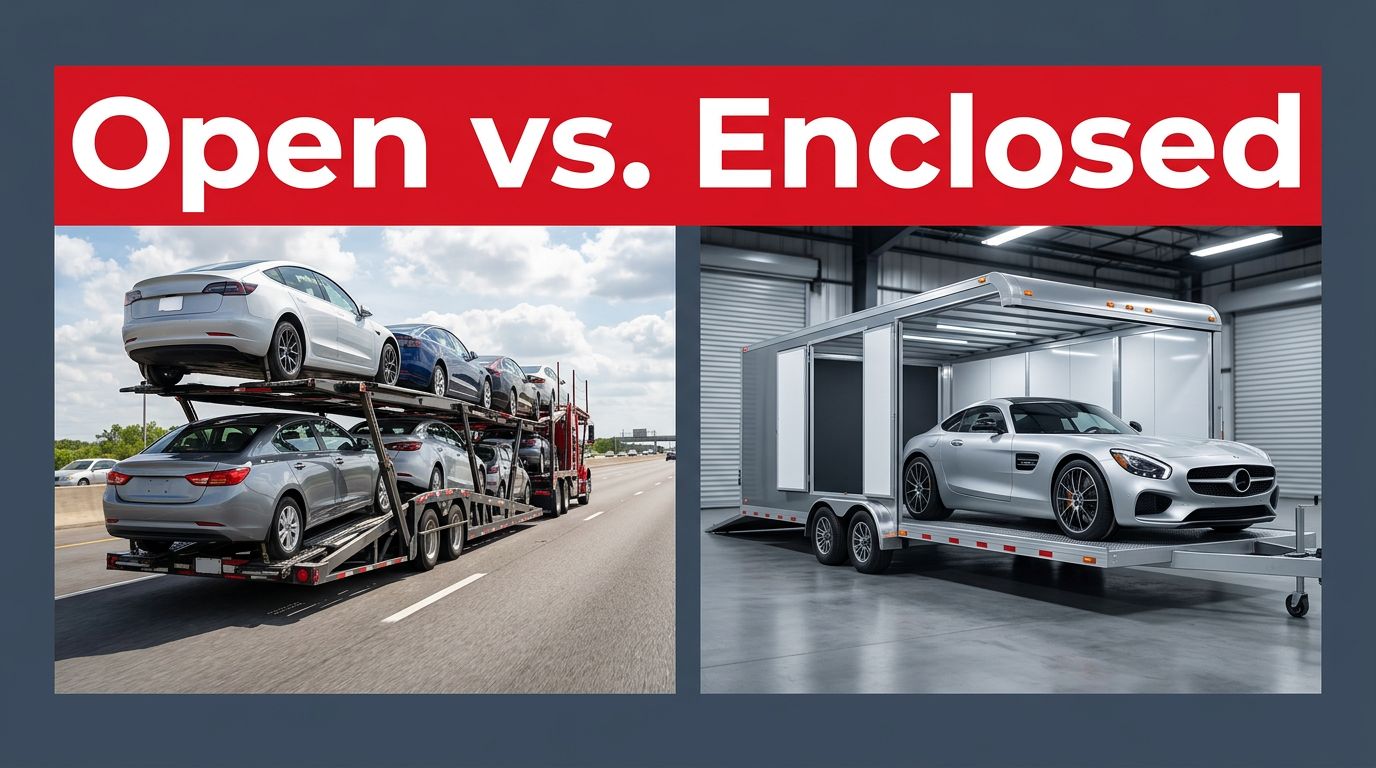
For most people, open transport is the practical answer. Your vehicle rides on a multi-car trailer, the same kind commonly used to deliver new cars to dealerships. It is exposed to normal weather and road conditions, but it is still secured for transport.
Open shipping is a good fit for standard sedans, crossovers, family SUVs, and work vehicles. It is also the most available option for California to Texas car shipping, which helps keep rates lower.
Enclosed vehicle shipping uses a covered trailer. Your vehicle is protected from rain, dust, road debris, and direct sun. It is often the right choice for a restored classic, luxury model, exotic car, race car, or a vehicle with a custom finish.
The cost difference can feel large. Still, it may make sense when the vehicle's value is much higher than the added transport cost. A damaged paint job or cracked windshield can cost more to fix than the upgrade to an enclosed carrier.
The choice comes down to your car and your comfort level. Don't pay for enclosed service out of habit, but don't choose open transport if you would worry about every mile.
Door-to-Door Service and Other Add-Ons
Most customers prefer door to door vehicle transport. The carrier picks up your car near your home, office, dealership, or another agreed location. Delivery happens as close to your Texas address as the truck can safely reach.
Door-to-door auto transport saves you from dropping your car at a terminal or traveling across town after delivery. It is especially helpful during a relocation when your schedule is already full.
Terminal shipping may look cheaper at first. However, it can bring storage fees, limited hours, and extra travel. Ask whether the quote includes home-area pickup and delivery before you compare prices.
Other services may affect the total:
Expedited transport can get your vehicle assigned faster, but it costs more.
Guaranteed pickup dates may carry an added charge.
Extra luggage inside the vehicle can add weight and create problems with the carrier.
A lifted truck or modified vehicle may need special trailer space.
Large trucks can require a safe meeting location instead of direct residential pickup.
A good quote should state what is included. It should also tell you if the price changes due to vehicle condition, oversized dimensions, or a difficult pickup location.
How Long Does California to Texas Car Shipping Take?
Most California to Texas shipments take three to seven days in transit once the vehicle is loaded. Some routes move faster, while rural stops and busy summer schedules can add time.
Pickup is separate from transit. Standard service may give you a pickup window of several days. Once a carrier is assigned, the driver usually contacts you before arrival and again before delivery.
The truck is not driving only your car across the country. It may pick up and drop off several vehicles along the route. Think of it like a moving bus with careful stops, not a private express trip.
Before pickup, wash the car, remove personal items, check the tire pressure, and take dated photos. At pickup and delivery, review the vehicle condition report with the driver. This simple step gives you a clear record of the car's condition.
How to Compare Quotes Without Getting Surprised
Get at least a few written quotes, but compare the details instead of only the lowest number. A quote that looks cheap can become expensive if it does not attract a carrier.
Ask each company whether the figure is the full carrier price or an estimate that may change later. Confirm the transport type, pickup window, insurance information, payment method, and cancellation terms.
You should also check whether the company is a broker, a carrier, or both. Brokers arrange transport with licensed carriers. That is common in auto shipping, but clear communication matters. You should know who is handling the load and when your vehicle is likely to move.
Many vehicle owners also compare the cost of shipping with the cost of driving. Real customer discussions about a Los Angeles to Dallas move often mention the same expenses: gas, overnight stays, time, and vehicle mileage. The cheapest option on paper is not always the easiest option in real life.
A Realistic Budget Makes the Move Easier
For a normal running sedan, plan on about $850 to $1,350 for California to Texas auto shipping. Set aside more if you have an SUV, truck, strict pickup date, remote address, or a vehicle that needs enclosed protection.
The best quote is clear, fair, and backed by a realistic pickup plan. When you are ready to arrange the move, US Car-Go Freight can help you compare transport options and ship your vehicle with confidence.


Comments